Capturing the Perfect Shot: Best Photography Spots Around Howick Falls
There is a specific kind of magic that settles over the KwaZulu-Natal Midlands during the autumn and winter months. The local morning mist, known affectionately by locals as the KZN mist, rolls off the rolling green hills and hangs over the Umgeni River gorge like heavy grey silk. Standing on the edge of the cliff with a camera in hand, watching this dense fog slowly reveal the thunderous 95-meter plunge of Howick Falls, is an experience that reminds me of my early days wandering the damp, atmospheric valleys of the English Lake District. For photographers, capturing great Howick Falls photos requires more than just showing up with a fast shutter speed. It takes patience, an understanding of light shifting across the rock faces, and a willingness to work with the moody weather that defines this corner of South Africa.
If you are wondering about Howick falls where is it located, it sits right at the heart of Howick town, just off the main road in the KwaZulu-Natal Midlands, roughly twenty minutes north of Pietermaritzburg. Unlike many natural wonders tucked away deep in remote wilderness, this massive cascade cascades right on the doorstep of local cafes and artisan studios along the Midlands Meander. To help you make the absolute most of your visit, I have put together this guide based on years of chasing golden hour light around the gorge, from the main public platforms down to the riverbed.
Light Dynamics at the Main Viewing Platform
The primary Howick Falls Main Viewing Platform is accessible free of charge and sits directly off the main tourist area in town. It provides a direct, head-on perspective of the 95-meter drop. Because the waterfall faces roughly east, morning light is where the magic happens. As the sun rises, the light breaks directly into the gorge, highlighting the airborne spray and creating brilliant contrast against the dark, wet basalt cliffs. If you arrive just after dawn, teh morning light cuts through the rising mist, often generating vivid rainbows across the lower plunge pool.
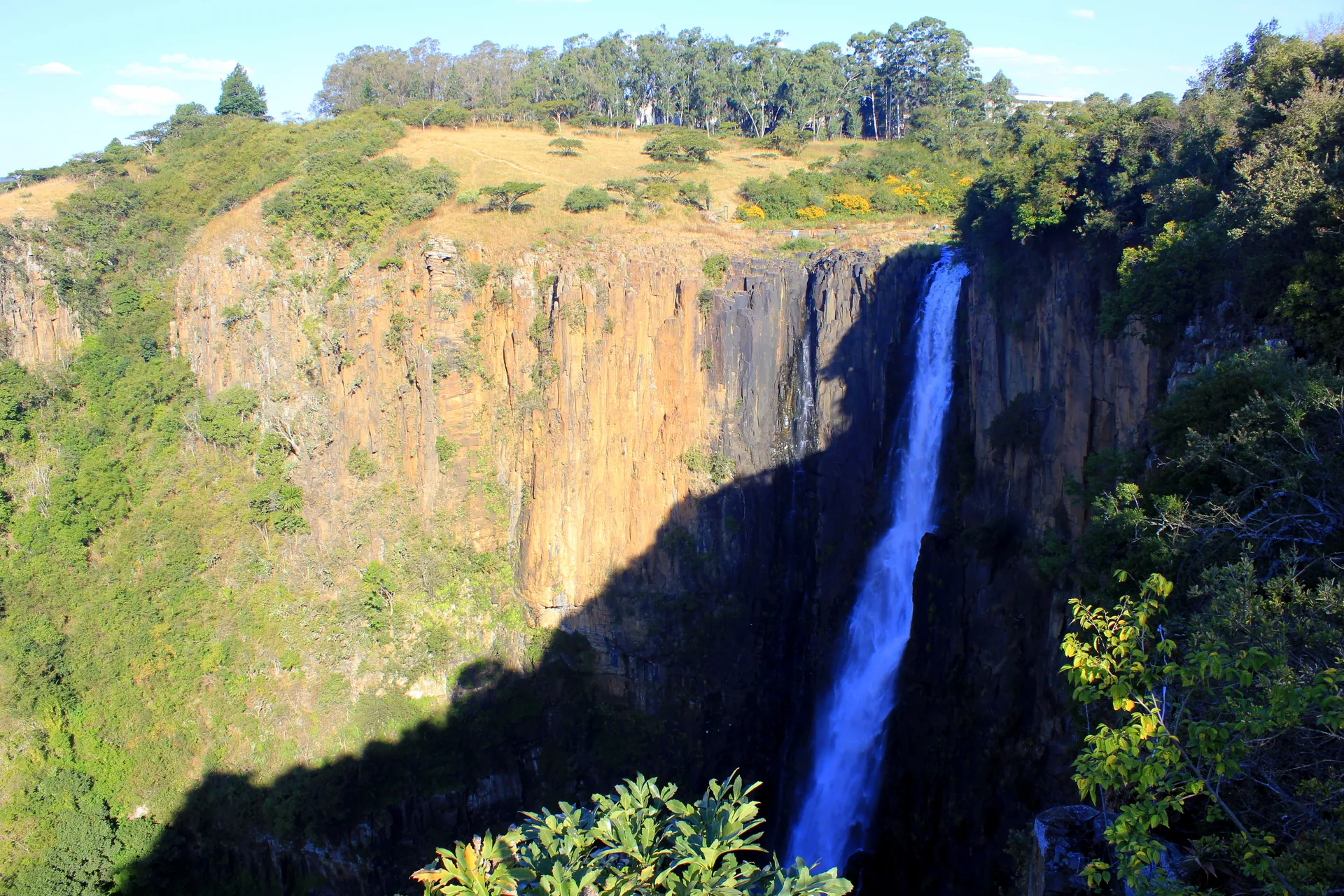
By midday, the high sun can cast harsh shadows down one side of the canyon wall while overexposing the white, churning water. If you are shooting during peak daylight hours, circular polarisers are essential to cut glare off the foliage and water surface. Early afternoon brings softer, side-lit conditions that emphasize the texture of the ancient rock strata. However, late afternoon shifts the sun behind the top ridge of the falls. This creates dramatic backlit silhouettes, transforming the roaring cascade into a bright ribbon against shadowed, moody terrain.
Capturing Scale and Compositional Techniques
One of the hardest challenges when photographing a single vertical drop of 95 meters is communicating its true size on a two-dimensional frame. Without proper context, a massive waterfall can easily look like a small garden cascade. To fix this, you need to incorporate foreground elements that give your audience an immediate point of reference.
- Native Botanical Framing: Use the lush indigenous foliage along the cliff rims, such as forest trees and flowering aloes, to frame the top left or right corners of your shot.
- Human Elements: Position a fellow traveler safely along the railing of the lower viewing deck to emphasize the sheer height of the surrounding cliff walls.
- Architectural Anchors: Include bits of the historic stone stonework around the edge of the overlook to ground the image in its local town setting.
Navigating Drone Regulations in the Umgeni Gorge
It is easy to see why aerial photographers are eager to fly drones over the Umgeni River gorge. The dramatic drop off the town edge into a lush green ravine creates incredible opportunities for sweeping top-down shots. However, strict aviation laws apply here that every visitor must understand before powering up their rotors.
The South African Civil Aviation Authority (SACAA) enforces strict regulations regarding unmanned aircraft. Recreational drone flying is heavily restricted directly above municipal viewing areas, populated town zones, and near public crowds without proper commercial licensing and flight approvals.
Beyond legal compliance, the gorge is a vital nesting corridor for several bird species, including raptors that can become aggressive towards hovering aircraft. If you are an authorized pilot holding the necessary permissions, always maintain a safe distance from both wildlife and cliff walls, and be mindful of sudden wind updrafts that channel through the canyon gap.
Descending the Gorge Walk for Low-Angle Angles
While the main platform is easy to reach and comfortable, true landscape lovers should take the time to trek down into the canyon itself. The Howick Falls Gorge Walk is a rugged, unpaved trail that descends through dense vegetation down to the riverbed near the base of the pool. From below, looking straight up at 95 meters of falling water offers a completely different perspective than the upper town overlook.
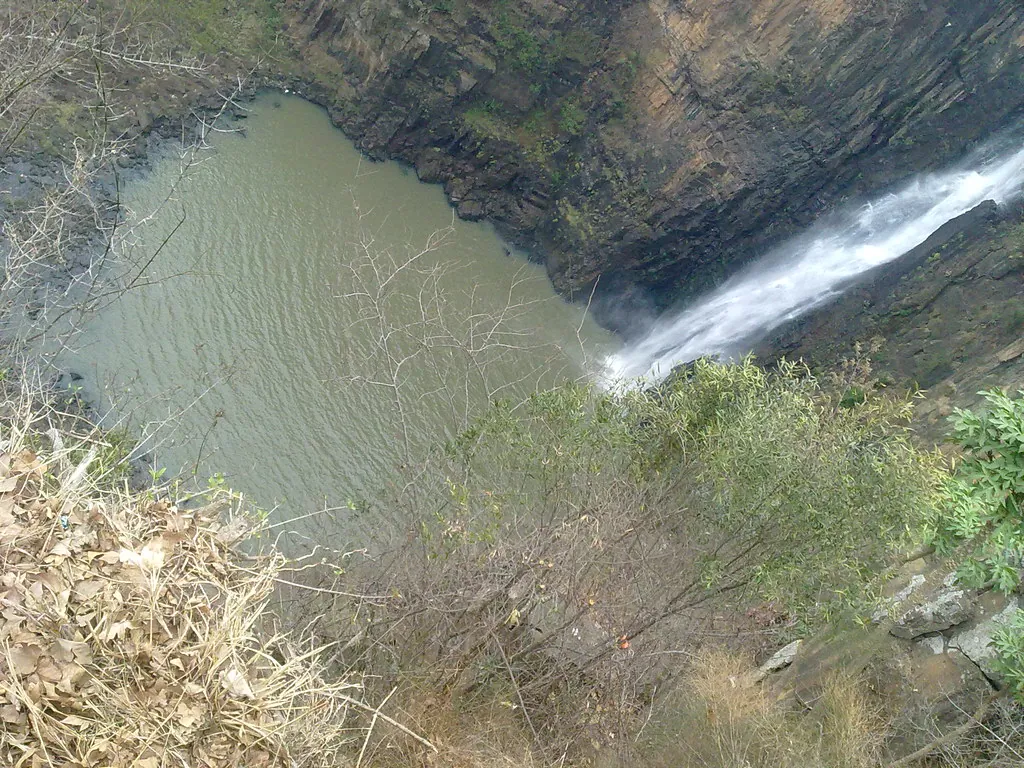
Hiking down requires sturdy footwear with reliable grip, as the damp trail turns slippery quickly. Loose stones and mud near the bottom demand careful foot placement. Down at water level, you can shoot low to the ground, using moss-covered boulders in the stream bed as leading lines toward the churning pool. Keep in mind that local Zulu culture holds deep respect for this pool, which is tied to the legend of the Inkanyamba, a mythical serpent said to inhabit the deep water. You can read more about this cultural history in our guide to the legend of the Inkanyamba serpent.
Essential Camera Equipment and Technical Choices
Selecting the right gear for shooting around Howick Falls depends entirely on whether you want sweeping wide landscapes or tight, abstract detail shots of the falling water. Packing a flexible setup will let you adapt to changing conditions throughout the day.
Wide-Angle Lenses (16-35mm)
A ultra-wide zoom is perfect for capturing the entire cliff face, the plunge pool, and the sky above in a single frame. It allows you to get close to foreground rocks on the Gorge Walk trail while keeping the full wall of water in focus.
Telephoto Lenses (70-200mm)
Telephoto focal lengths let you isolate specific textures in the roaring cascade. You can zoom in on the crest where the river breaks over the edge, or crop tight on the misty spray clouds kicked up at the base of the canyon.
A sturdy tripod is vital if you want to shoot long exposures. Using neutral density (ND) filters, such as a 6-stop or 10-stop ND filter, lets you slow down your shutter speed to anywhere between two and ten seconds during broad daylight. This smooths out the surface of the pool and turns the rushing water into a silky texture. Before heading down the trail, be sure to check our overview on conquering the gorge walk trail for route details and terrain advice.
Managing Mist Spray and Lens Condensation
Shooting close to a 95-meter drop comes with an obvious environmental challenge: massive clouds of swirling water spray. Down near the base of the watrefall, the air is constantly saturated with mist, which presents real hazards for electronic camera bodies and optical glass elements.
To keep your equipment safe, always carry several clean microfibre cloths sealed in plastic bags. Lens cloths become soaked almost instantly when exposed to heavy spray, so having fresh, dry replacements is critical. Keep a waterproof rain cover or dry bag over your camera while setting up your shot, and only remove your lens cap moments before firing the shutter. If you are transitioning between cool morning air outside and a warm vehicle interior, allow your lenses time to acclimate slowly to prevent moisture condensation from forming inside the glass barrels. For safety considerations around water hazards, review our guide on navigating safety at South African waterfalls.
Golden Hour Magic and Evening Compositions
As the late afternoon sun dips behind the western hills of the Midlands, the light softens into rich tones of amber and pink. While the gorge floor drops into cool blue shadow, the top of the waterfall and the rising cloud of mist catch the last rays of sunlight. This contrast between warm upper highlights and deep, moody shadows in the canyon creates some of the most stunning photographic opportunities in the region.
Positioning yourself near the upper town viewpoint during the final thirty minutes before dusk lets you capture glowing golden spray rising against the dark blue backdrop of the shadowed canyon walls.
During winter evenings, temperature inversions often cause low-hanging fog to roll back over the river. Capturing this fog as it drifts around the dark basalt cliffs during twilight provides an eerie, timeless quality that perfectly matches the spirit of the local landscape.
Safety, Gear Security, and Community Etiquette
While Howick is a friendly and welcoming town, basic safety precautions are sensible whenever you are carrying expensive photographic equipment in public areas. Keep your gear bag zipped up and close to your body when setting up shots at the main viewing terrace. Avoid leaving camera bags unattended on benches while you focus on composing through the viewfinder.
When setting up tripods on public walkways, be mindful of local visitors and craft market vendors going about their day. Avoid blocking pedestrian paths or access ramps. If you plan to hike down into the gorge late in the afternoon, always let someone know your expected return time or hire a accredited local guide to accompany you. For general travel logistics and park regulations, you can check our comprehensive hub on visitor rules and guidelines.
Beyond Howick Falls
South Africa is packed with magnificent geological formations, dramatic coastal drop-offs, and botanical preserves that offer world-class landscape photography. Comparing the moody, mist-laden character of Howick Falls to other iconic national sights helps place this Midlands landmark in context. Beyond the local falls, destinations across the country provide distinct light, rock structures, and plant life worth exploring with a camera.
Top Nearby Spots Comparison
| Attraction Name | Type / Landscape | Rating | Key Photographic Appeal |
|---|---|---|---|
| Valley of Desolation | Viewpoint / Dolerite Columns | 4.8 | Dramatic sheer rock pillars and expansive arid Karoo vistas. |
| Kirstenbosch Botanical Garden | Botanical Garden / Mountain Backdrop | 4.8 | Lush indigenous flora set against eastern slopes of Table Mountain. |
| Cape Point Nature Reserve | Nature Reserve / Coastal Cliffs | 4.7 | Towering marine cliffs, churning ocean mist, and wild coastal trails. |
| De Hoop Nature Reserve | Nature Reserve / Coastal Sand Dunes | 4.7 | Pristine white sand dunes meeting rich turquoise ocean waters. |
Highlights Around the Region
Arid Formations and Arched Horizons
In contrast to the green vegetation of Howick, sites like the Valley of Desolation feature dramatic dolerite columns jutting out of open desert plains. Shooting these ancient rock pillars during sunset reveals rich orange hues that differ completely from the cool blues and greens of the KZN Midlands gorge.
Lush Flora and Botanical Frames
Photographers interested in plant life will find incredible diversity managed by the South African National Biodiversity Institute (SANBI) at Kirstenbosch National Botanical Garden. The mix of wild proteas, tree canopies, and mountain shadows offers ideal natural framing techniques similar to those used along the Howick Gorge trail.
Dramatic Marine Cliff Edges
For coastal scale, head to Cape Point Nature Reserve inside the SANParks network. Standing high above churning sea spray provides a landscape challenge comparable to shooting the Howick gorge from above, with sweeping salt mist replaced by mountain fog.
Coastal Dunes and Textures
Along the Southern Cape coastline, De Hoop Nature Reserve offers clean white sand dunes that ripple under wind patterns. Capturing the interplay of light across soft sand gives landscape photographers a great lesson in texture composition that complements hard rock waterfall photography.
Getting Around
Exploring the photography locations around Howick and the wider Midlands region is straightforward when traveling by car. Driving from Durban via the N3 highway takes approximately one hour and fifteen minutes, while Johannesburg is roughly a five-hour drive to the north. For detailed transit advice, parking layouts, and route maps, visit our dedicated guide on how to get to Howick Falls. You can also explore curated local experiences, guided hikes, and photography tours on our tickets and tours page to make your photography trip through KwaZulu-Natal seamless.