Uncovering the Legend of the Inkanyamba: The Mythical Serpent of Howick Falls
This inaccessible depth provides the ideal setting for a mythic water guardian. Traditional beliefs maintain that the pool has no bottom, connecting through subterranean channels to other deep river systems in the region. Swimming in the pool is strictly forbidden by both local municipal regulations and centuries of spiritual taboo. Those who have attempted to brave the water have frequently succumbed to the lethal undercurrents, deaths that local folklore attributes directly to the serpent pulling intruders into its subterranean lair. Visitors should review the official waterfall safety guidelines before attempting to get anywhere near the riverbank.
| Feature | Physical Reality | Mythological Interpretation |
|---|---|---|
| Location | uMngeni River plunge basin | Sacred sanctuary of the storm beast |
| Pool Depth | Unmeasured deep basalt cavern | Bottomless portal to ancestral waters |
| Water Movement | High-velocity hydraulic eddies | The thrashing of the serpent’s tail |
| Site Access | Restricted viewing decks | Forbidden ground reserved for traditional healers |
Meteorology as Mythology: Tornadoes and Migration
The seasonal weather patterns of the KwaZulu-Natal Midlands offer a fascinating parallel to the stories surrounding the creature. Between November and March, supercell thunderstorms frequently form over the Drakensberg mountains and sweep eastward toward the coast. These storms bring torrential downpours, tennis-ball-sized hail, and occasional tornadoes that cut narrow paths of damage through the timber plantations around Howick.
In Xhosa and Zulu lore, these summer tempests occur when the creature takes to the air to search for a mate or migrate to another body of water. The creature rises from the plunge pool, taking the form of a column of wind and dark cloud. As it travels across the landscape toward places like Midmar Dam or the Mkomazi River, its furious search tears roofs off houses and uproots pine trees. When a severe tornado struck the nearby town of Greytown in the late twentieth century, many traditional residents viewed the atmospheric destruction as the direct path of a migrating serpent.

Sacred Ground: The Role of the Sangoma
Within Zulu society, the area surrounding the base of KwaNogqaza is considered a deeply spiritual domain. Sangomas, who are traditional spiritual healers, serve as the sole intermediaries between the human community and the ancestral spirits that inhabit natural features like rivers and mountain peaks. Ordinary individuals are warned against approaching the water’s edge, as unannounced human presence is believed to pollute the sanctuary.
Sangomas undergo specialized training and spiritual preparation before descending into the gorge. They visit the quiet banks below the pool to present offerings such as traditional beer, tobacco, and colourful beads to appease the spirit world. These rituals aim to secure good rains for the agricultural season, heal illnesses, or request protection from severe storms. To understand the wider administrative policies governing cultural heritage sites across the province, travellers can check the Ezemvelo KZN Wildlife portal.
Respecting these traditional boundaries is an important part of visiting the Midlands. If you happen to observe a sangoma conducting a ceremony near the river during your stay, you should keep a respectful distance and avoid taking photos without permission. Our guide to visitor rules and guidelines outlines appropriate etiquette when encountering spiritual ceremonies near public nature reserves.
Historical Sightings: From Game Rangers to the 1995 Reward
While the story originates in ancient oral tradition, written accounts of strange encounters in the uMngeni River basin began appearing in local newspaper archives during the twentieth century. These accounts brought the story out of rural villages and into mainstream South African popular culture, drawing curious naturalists and cryptid enthusiasts to the town.
In 1962, a respected conservation ranger named Mr. Buthelezi reported seeing an extraordinary creature lying on a exposed sandbank along the uMngeni River, a short distance upstream from the main falls. He described an animal over fifteen feet long with a distinct equine head and dark, thick skin. As he approached the riverbank to get a clearer look, the creature slid smoothly into the deep water and disappeared without making a wave.
Between 1969 and 1985, Johannes Hlongwane served as the caretaker for a caravan park situated close to the waterfall gorge. Hlongwane claimed two separate sightings of the creature, once in 1971 and again in 1981. During the 1981 sighting, which occurred during a misty morning, he reported seeing a thick, dark neck rise thirty feet straight out of the water. He noted a pronounced crest running down its spine before the form submerged into the white foam.
The most famous modern chapter in the legend occurred in September 1995. Bob Teeney, a local restaurant owner in Howick, claimed to see a massive, serpentine form with a long neck breaking the surface of the plunge pool while he was standing on the main observation deck. Lacking a camera at that exact moment, Teeney publically offered a financial reward to anyone who could provide clear photographic evidence of the creature. The announcement created a media flurry, filling local guesthouses with journalists and amateur photographers equipped with telephoto lenses. Historical records of regional town developments can be viewed via the Msunduzi Municipality archives.
Shortly after the reward was announced, a grainy photograph surfaced showing a dark, sinuous object rising out of the water alongside three smaller forms. Sceptics quickly dismissed the picture as a floating tree trunk accompanied by a family of ducks, while believers argued that teh image captured the creature swimming with its offspring. Regardless of the photo’s authenticity, the event permanently cemented Howick’s reputation as a focal point for South African folklore.
Eels, Optical Tricks, and Scientific Explanations
Biologists and freshwater ecologists who have studied the uMngeni River offer far more grounded explanations for these sightings. The river systems of eastern South Africa are inhabited by extraordinary migratory fish that can easily confuse an observer watching through thick mist or heavy spray.
- African Long-Finned Eel (Anguilla mossambica): These thick-bodied freshwater eels can grow to lengths over six feet and weigh upwards of twenty kilograms. They regularly migrate up river channels from the Indian Ocean, slithering over wet rocks and muddy banks during damp nights.
- Giant Mottled Eel (Anguilla marmorata): Reaching similar massive proportions, these bottom-dwelling fish inhabit deep, rocky pools. When swimming near the surface, their sinuous, undulating motion looks remarkably like a small Howick Falls snake.
- Hydraulic Driftwood: Heavy storms upstream frequently wash large, dislodged trees down the uMngeni River. When a log becomes trapped in the circular whirlpools below the drop, it can bob vertically for days, mimicking a long neck rising from the depths.
- Optical Illusions in Misty Air: The perpetual spray generated by a 95-metre drop creates complex light refraction. Rising mist combined with shifting shadows on dark basalt rocks can easily trick the human eye into seeing movement in stationary objects.
Even when presented with biological evidence, many local residents view these scientific explanations as complementary rather than contradictory. An unusually large long-finned eel slithering up a misty bank might simply be the physical vessel through which the spiritual guardian manifests itself to human eyes.
Cultural Respect, Modern Safety, and Gorge Trails
An interesting aspect of traditional taboos is how effectively they enforce modern public safety. Howick Falls has claimed numerous lives over the decades, primarily due to slippery granite rocks near the cliff edge and lethal undercurrents in the plunge pool. The spiritual prohibition against approaching the water’s edge or swimming in the basin keeps local children away from an inherently hazardous natural site.
For visitors wanting to explore the river valley safely, official hiking paths provide monitored access through the indigenous forest. The formal Howick Falls gorge walk takes hikers down through the canopy to a safe viewpoint near the riverbed, well clear of the dangerous hydraulic recirculations directly under the fall. Walking these designated paths allows you to experience the natural beauty of the gorge while respecting both the environment and local traditions.
If you prefer a structured itinerary with registered guides, exploring our page on tickets and tour bookings helps you select reputable day trips that incorporate both environmental interpretation and local folklore. There are also plenty of craft markets, art studios, and historic sites to fill an afternoon when researching things to do in Howick.
Conclusion: The Spirit of the Midlands Meander
Living in Howick, you learn to appreciate the weather and the landscape in a way that feels very close to how people lived here centuries ago. When the clouds gather over the hills and the rain starts to drum on the tin roofs along the main street, the waterfall grows louder, sending a deep resonance across the whole town. The story of the Inkanyamba is not merely a piece of old trivia printed on a tourist brochure; it is a legendary serpent that locals continue to live with.
Whether you choose to look at the plunge pool as an ecological sanctuary for giant freshwater eels or as the home of a storm spirit, standing at the viewing deck as the evening mist rolls over the cliff is an unforgettable experience. To start planning your journey through our region, consult South African Tourism for broader travel advisories, check our page on how to get to Howick Falls for clear driving directions, or read through our frequently asked visitor questions to ensure your visit to the KwaZulu-Natal Midlands goes smoothly.
When the mist sits low in the gorge and the river rises after heavy rain, you do not point your finger at the water. To point is to disrespect the dweller below, and a disrespect dweller brings the wind down upon your home.
Midlands Storyteller and Cultural Custodian
The Abode in the Depths
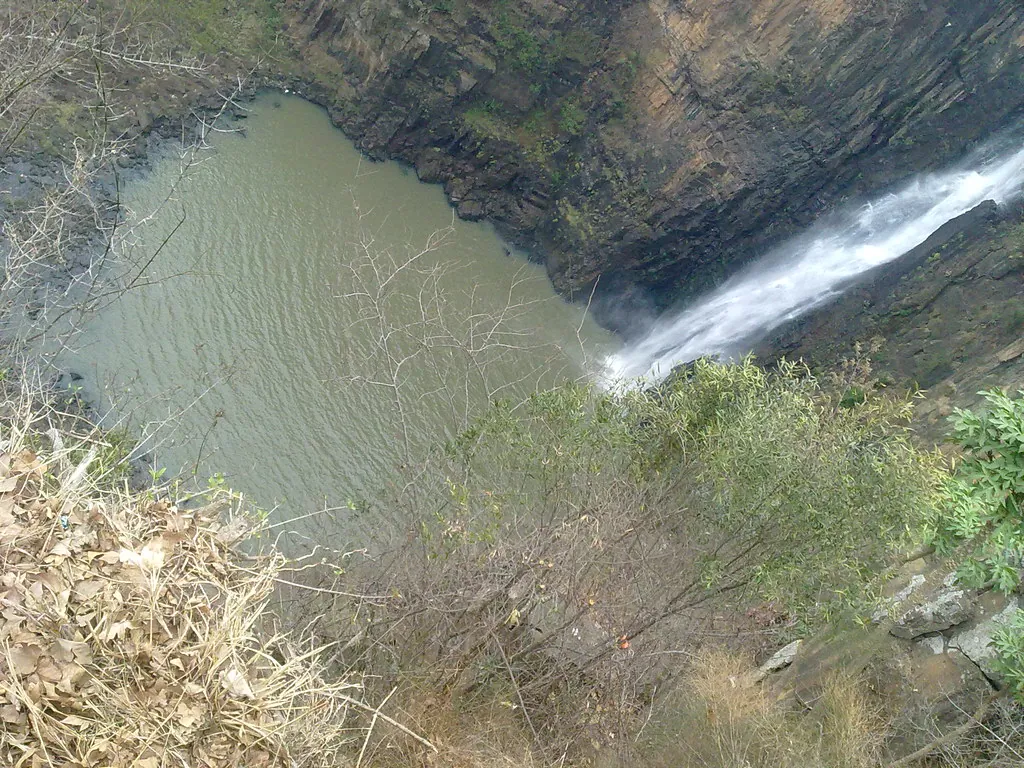
The plunge pool at Howick Falls sits directly beneath a 95-metre vertical drop on the uMngeni River. The sheer momentum of the cascading water has carved a deep, scoured hollow into the basalt bedrock over millions of years. Hydraulic action creates constant, violent undercurrents and circular whirlpools that make measuring the exact depth remarkably difficult for hydrologists.
This inaccessible depth provides the ideal setting for a mythic water guardian. Traditional beliefs maintain that the pool has no bottom, connecting through subterranean channels to other deep river systems in the region. Swimming in the pool is strictly forbidden by both local municipal regulations and centuries of spiritual taboo. Those who have attempted to brave the water have frequently succumbed to the lethal undercurrents, deaths that local folklore attributes directly to the serpent pulling intruders into its subterranean lair. Visitors should review the official waterfall safety guidelines before attempting to get anywhere near the riverbank.
| Feature | Physical Reality | Mythological Interpretation |
|---|---|---|
| Location | uMngeni River plunge basin | Sacred sanctuary of the storm beast |
| Pool Depth | Unmeasured deep basalt cavern | Bottomless portal to ancestral waters |
| Water Movement | High-velocity hydraulic eddies | The thrashing of the serpent’s tail |
| Site Access | Restricted viewing decks | Forbidden ground reserved for traditional healers |
Meteorology as Mythology: Tornadoes and Migration
The seasonal weather patterns of the KwaZulu-Natal Midlands offer a fascinating parallel to the stories surrounding the creature. Between November and March, supercell thunderstorms frequently form over the Drakensberg mountains and sweep eastward toward the coast. These storms bring torrential downpours, tennis-ball-sized hail, and occasional tornadoes that cut narrow paths of damage through the timber plantations around Howick.
In Xhosa and Zulu lore, these summer tempests occur when the creature takes to the air to search for a mate or migrate to another body of water. The creature rises from the plunge pool, taking the form of a column of wind and dark cloud. As it travels across the landscape toward places like Midmar Dam or the Mkomazi River, its furious search tears roofs off houses and uproots pine trees. When a severe tornado struck the nearby town of Greytown in the late twentieth century, many traditional residents viewed the atmospheric destruction as the direct path of a migrating serpent.
Sacred Ground: The Role of the Sangoma
Within Zulu society, the area surrounding the base of KwaNogqaza is considered a deeply spiritual domain. Sangomas, who are traditional spiritual healers, serve as the sole intermediaries between the human community and the ancestral spirits that inhabit natural features like rivers and mountain peaks. Ordinary individuals are warned against approaching the water’s edge, as unannounced human presence is believed to pollute the sanctuary.
Sangomas undergo specialized training and spiritual preparation before descending into the gorge. They visit the quiet banks below the pool to present offerings such as traditional beer, tobacco, and colourful beads to appease the spirit world. These rituals aim to secure good rains for the agricultural season, heal illnesses, or request protection from severe storms. To understand the wider administrative policies governing cultural heritage sites across the province, travellers can check the Ezemvelo KZN Wildlife portal.
Respecting these traditional boundaries is an important part of visiting the Midlands. If you happen to observe a sangoma conducting a ceremony near the river during your stay, you should keep a respectful distance and avoid taking photos without permission. Our guide to visitor rules and guidelines outlines appropriate etiquette when encountering spiritual ceremonies near public nature reserves.
Historical Sightings: From Game Rangers to the 1995 Reward
While the story originates in ancient oral tradition, written accounts of strange encounters in the uMngeni River basin began appearing in local newspaper archives during the twentieth century. These accounts brought the story out of rural villages and into mainstream South African popular culture, drawing curious naturalists and cryptid enthusiasts to the town.
In 1962, a respected conservation ranger named Mr. Buthelezi reported seeing an extraordinary creature lying on a exposed sandbank along the uMngeni River, a short distance upstream from the main falls. He described an animal over fifteen feet long with a distinct equine head and dark, thick skin. As he approached the riverbank to get a clearer look, the creature slid smoothly into the deep water and disappeared without making a wave.
Between 1969 and 1985, Johannes Hlongwane served as the caretaker for a caravan park situated close to the waterfall gorge. Hlongwane claimed two separate sightings of the creature, once in 1971 and again in 1981. During the 1981 sighting, which occurred during a misty morning, he reported seeing a thick, dark neck rise thirty feet straight out of the water. He noted a pronounced crest running down its spine before the form submerged into the white foam.
The most famous modern chapter in the legend occurred in September 1995. Bob Teeney, a local restaurant owner in Howick, claimed to see a massive, serpentine form with a long neck breaking the surface of the plunge pool while he was standing on the main observation deck. Lacking a camera at that exact moment, Teeney publically offered a financial reward to anyone who could provide clear photographic evidence of the creature. The announcement created a media flurry, filling local guesthouses with journalists and amateur photographers equipped with telephoto lenses. Historical records of regional town developments can be viewed via the Msunduzi Municipality archives.
Shortly after the reward was announced, a grainy photograph surfaced showing a dark, sinuous object rising out of the water alongside three smaller forms. Sceptics quickly dismissed the picture as a floating tree trunk accompanied by a family of ducks, while believers argued that teh image captured the creature swimming with its offspring. Regardless of the photo’s authenticity, the event permanently cemented Howick’s reputation as a focal point for South African folklore.
Eels, Optical Tricks, and Scientific Explanations
Biologists and freshwater ecologists who have studied the uMngeni River offer far more grounded explanations for these sightings. The river systems of eastern South Africa are inhabited by extraordinary migratory fish that can easily confuse an observer watching through thick mist or heavy spray.
- African Long-Finned Eel (Anguilla mossambica): These thick-bodied freshwater eels can grow to lengths over six feet and weigh upwards of twenty kilograms. They regularly migrate up river channels from the Indian Ocean, slithering over wet rocks and muddy banks during damp nights.
- Giant Mottled Eel (Anguilla marmorata): Reaching similar massive proportions, these bottom-dwelling fish inhabit deep, rocky pools. When swimming near the surface, their sinuous, undulating motion looks remarkably like a small Howick Falls snake.
- Hydraulic Driftwood: Heavy storms upstream frequently wash large, dislodged trees down the uMngeni River. When a log becomes trapped in the circular whirlpools below the drop, it can bob vertically for days, mimicking a long neck rising from the depths.
- Optical Illusions in Misty Air: The perpetual spray generated by a 95-metre drop creates complex light refraction. Rising mist combined with shifting shadows on dark basalt rocks can easily trick the human eye into seeing movement in stationary objects.
Even when presented with biological evidence, many local residents view these scientific explanations as complementary rather than contradictory. An unusually large long-finned eel slithering up a misty bank might simply be the physical vessel through which the spiritual guardian manifests itself to human eyes.
Cultural Respect, Modern Safety, and Gorge Trails
An interesting aspect of traditional taboos is how effectively they enforce modern public safety. Howick Falls has claimed numerous lives over the decades, primarily due to slippery granite rocks near the cliff edge and lethal undercurrents in the plunge pool. The spiritual prohibition against approaching the water’s edge or swimming in the basin keeps local children away from an inherently hazardous natural site.
For visitors wanting to explore the river valley safely, official hiking paths provide monitored access through the indigenous forest. The formal Howick Falls gorge walk takes hikers down through the canopy to a safe viewpoint near the riverbed, well clear of the dangerous hydraulic recirculations directly under the fall. Walking these designated paths allows you to experience the natural beauty of the gorge while respecting both the environment and local traditions.
If you prefer a structured itinerary with registered guides, exploring our page on tickets and tour bookings helps you select reputable day trips that incorporate both environmental interpretation and local folklore. There are also plenty of craft markets, art studios, and historic sites to fill an afternoon when researching things to do in Howick.
Conclusion: The Spirit of the Midlands Meander
Living in Howick, you learn to appreciate the weather and the landscape in a way that feels very close to how people lived here centuries ago. When the clouds gather over the hills and the rain starts to drum on the tin roofs along the main street, the waterfall grows louder, sending a deep resonance across the whole town. The story of the Inkanyamba is not merely a piece of old trivia printed on a tourist brochure; it is a legendary serpent that locals continue to live with.
Whether you choose to look at the plunge pool as an ecological sanctuary for giant freshwater eels or as the home of a storm spirit, standing at the viewing deck as the evening mist rolls over the cliff is an unforgettable experience. To start planning your journey through our region, consult South African Tourism for broader travel advisories, check our page on how to get to Howick Falls for clear driving directions, or read through our frequently asked visitor questions to ensure your visit to the KwaZulu-Natal Midlands goes smoothly.
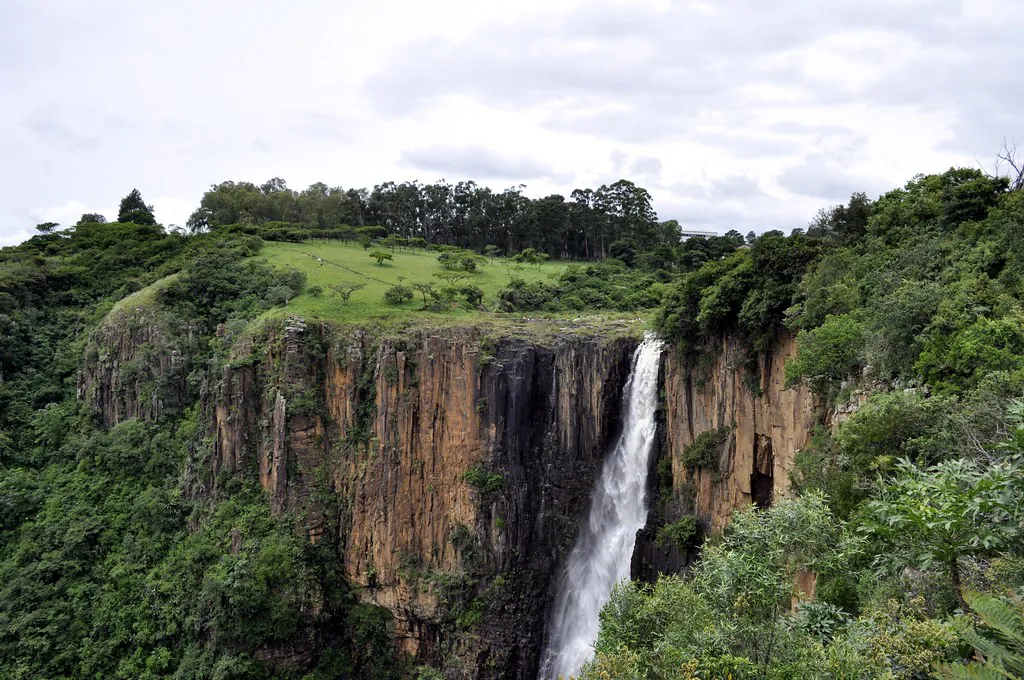
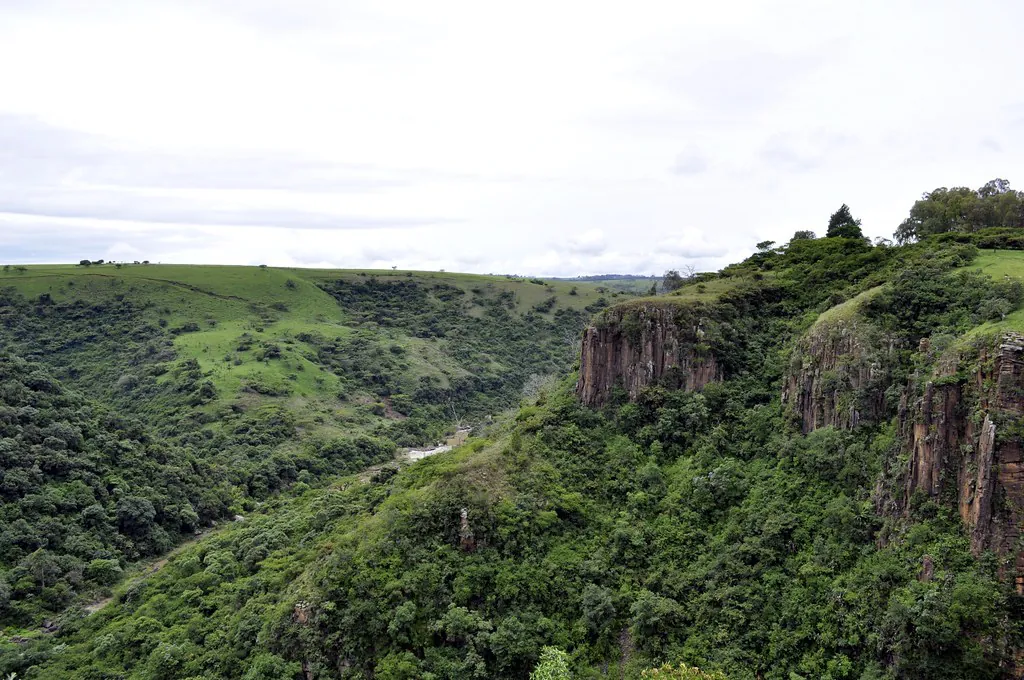
The KwaZulu-Natal mist creeps over the cliff edge near my cottage in Howick long before the sun breaks through the valley. Standing at the public viewpoint, watching ninety-five metres of white water plunge off the red sandstone lip into the dark basin below, you feel a low rumble vibrating in your chest. Local Zulu elders call this waterfall KwaNogqaza, a name translating to The Place of the Tall One. If you spend any time speaking with residents along the river, you quickly learn that this name refers to something far more mysterious than the sheer rock face. For centuries, traditional stories have held that the dark plunge pool hides a massive aquatic monster known across southern Africa as the Inkanyamba.
When tourists ask me what are some interesting facts about Howick Falls, I always tell them to look past the height of the drop and pay attention to the water itself. The pool below is deep, turbulent, and shadowed by dense vegetation that thrives in the perpetual damp. In indigenous folklore, this basin is the home of a sacred, feared serpent that controls the weather. The air around the gorge feels heavy with old memory, making it remarkably easy to understand how this landscape shaped such enduring traditions. If you plan to explore our region, our comprehensive Howick Falls guide provides essential context for navigating the viewing areas and understanding the valley layout.
Etymology and the Storm Serpent
The name Inkanyamba carries deep roots in Bantu languages, particularly within Zulu and Xhosa linguistic traditions. It refers directly to a destructive force of nature, specifically tornadoes and severe summer atmospheric disturbances. In traditional cosmology, the creature is not a simple monster living in isolation. It is a rain animal, an entity tied to the moisture-laden clouds that sweep in from the Indian Ocean during the humid summer months.
Information documented by the Department of Sport, Arts and Culture shows how indigenous oral histories record environmental events through spiritual narratives. When sudden hail storms or severe winds flatten crops in the Midlands, traditional beliefs attribute the destruction to the fury of the serpent. The beast becomes enraged when disturbed, rising from its underwater lair to strike at the sky. This connection between aquatic life and meteorological violence forms a central column of indigenous environmental understanding across KwaZulu-Natal.
Anatomy of a Myth: Physical Descriptions
Oral tradition paints a vivid picture of the creature, though eyewitness accounts from diffrent generations vary in their details. The entity is universally described as a giant serpent, often reaching lengths of twenty to thirty feet. Its head is frequently said to resemble that of a horse or a zebra, complete with a dark mane or a finned crest running along its neck. Some older accounts mention prominent canine teeth and large, dark eyes that glow beneath the mist.
In certain regional variations of the story, the Inkanyamba possesses large flippers or winged appendages along its flanks. These wings are not used for soaring gracefully through the air like a bird. Instead, they stir up violent whirlwinds when the creature lifts its torso out of the river system. The scales are described as dark, slick, and shimmering with an oily sheen that reflects the golden light of the gorge at sunset.
When the mist sits low in the gorge and the river rises after heavy rain, you do not point your finger at the water. To point is to disrespect the dweller below, and a disrespect dweller brings the wind down upon your home.
Midlands Storyteller and Cultural Custodian
The Abode in the Depths
The plunge pool at Howick Falls sits directly beneath a 95-metre vertical drop on the uMngeni River. The sheer momentum of the cascading water has carved a deep, scoured hollow into the basalt bedrock over millions of years. Hydraulic action creates constant, violent undercurrents and circular whirlpools that make measuring the exact depth remarkably difficult for hydrologists.
This inaccessible depth provides the ideal setting for a mythic water guardian. Traditional beliefs maintain that the pool has no bottom, connecting through subterranean channels to other deep river systems in the region. Swimming in the pool is strictly forbidden by both local municipal regulations and centuries of spiritual taboo. Those who have attempted to brave the water have frequently succumbed to the lethal undercurrents, deaths that local folklore attributes directly to the serpent pulling intruders into its subterranean lair. Visitors should review the official waterfall safety guidelines before attempting to get anywhere near the riverbank.
| Feature | Physical Reality | Mythological Interpretation |
|---|---|---|
| Location | uMngeni River plunge basin | Sacred sanctuary of the storm beast |
| Pool Depth | Unmeasured deep basalt cavern | Bottomless portal to ancestral waters |
| Water Movement | High-velocity hydraulic eddies | The thrashing of the serpent’s tail |
| Site Access | Restricted viewing decks | Forbidden ground reserved for traditional healers |
Meteorology as Mythology: Tornadoes and Migration
The seasonal weather patterns of the KwaZulu-Natal Midlands offer a fascinating parallel to the stories surrounding the creature. Between November and March, supercell thunderstorms frequently form over the Drakensberg mountains and sweep eastward toward the coast. These storms bring torrential downpours, tennis-ball-sized hail, and occasional tornadoes that cut narrow paths of damage through the timber plantations around Howick.
In Xhosa and Zulu lore, these summer tempests occur when the creature takes to the air to search for a mate or migrate to another body of water. The creature rises from the plunge pool, taking the form of a column of wind and dark cloud. As it travels across the landscape toward places like Midmar Dam or the Mkomazi River, its furious search tears roofs off houses and uproots pine trees. When a severe tornado struck the nearby town of Greytown in the late twentieth century, many traditional residents viewed the atmospheric destruction as the direct path of a migrating serpent.
Sacred Ground: The Role of the Sangoma
Within Zulu society, the area surrounding the base of KwaNogqaza is considered a deeply spiritual domain. Sangomas, who are traditional spiritual healers, serve as the sole intermediaries between the human community and the ancestral spirits that inhabit natural features like rivers and mountain peaks. Ordinary individuals are warned against approaching the water’s edge, as unannounced human presence is believed to pollute the sanctuary.
Sangomas undergo specialized training and spiritual preparation before descending into the gorge. They visit the quiet banks below the pool to present offerings such as traditional beer, tobacco, and colourful beads to appease the spirit world. These rituals aim to secure good rains for the agricultural season, heal illnesses, or request protection from severe storms. To understand the wider administrative policies governing cultural heritage sites across the province, travellers can check the Ezemvelo KZN Wildlife portal.
Respecting these traditional boundaries is an important part of visiting the Midlands. If you happen to observe a sangoma conducting a ceremony near the river during your stay, you should keep a respectful distance and avoid taking photos without permission. Our guide to visitor rules and guidelines outlines appropriate etiquette when encountering spiritual ceremonies near public nature reserves.
Historical Sightings: From Game Rangers to the 1995 Reward
While the story originates in ancient oral tradition, written accounts of strange encounters in the uMngeni River basin began appearing in local newspaper archives during the twentieth century. These accounts brought the story out of rural villages and into mainstream South African popular culture, drawing curious naturalists and cryptid enthusiasts to the town.
In 1962, a respected conservation ranger named Mr. Buthelezi reported seeing an extraordinary creature lying on a exposed sandbank along the uMngeni River, a short distance upstream from the main falls. He described an animal over fifteen feet long with a distinct equine head and dark, thick skin. As he approached the riverbank to get a clearer look, the creature slid smoothly into the deep water and disappeared without making a wave.
Between 1969 and 1985, Johannes Hlongwane served as the caretaker for a caravan park situated close to the waterfall gorge. Hlongwane claimed two separate sightings of the creature, once in 1971 and again in 1981. During the 1981 sighting, which occurred during a misty morning, he reported seeing a thick, dark neck rise thirty feet straight out of the water. He noted a pronounced crest running down its spine before the form submerged into the white foam.
The most famous modern chapter in the legend occurred in September 1995. Bob Teeney, a local restaurant owner in Howick, claimed to see a massive, serpentine form with a long neck breaking the surface of the plunge pool while he was standing on the main observation deck. Lacking a camera at that exact moment, Teeney publically offered a financial reward to anyone who could provide clear photographic evidence of the creature. The announcement created a media flurry, filling local guesthouses with journalists and amateur photographers equipped with telephoto lenses. Historical records of regional town developments can be viewed via the Msunduzi Municipality archives.
Shortly after the reward was announced, a grainy photograph surfaced showing a dark, sinuous object rising out of the water alongside three smaller forms. Sceptics quickly dismissed the picture as a floating tree trunk accompanied by a family of ducks, while believers argued that teh image captured the creature swimming with its offspring. Regardless of the photo’s authenticity, the event permanently cemented Howick’s reputation as a focal point for South African folklore.
Eels, Optical Tricks, and Scientific Explanations
Biologists and freshwater ecologists who have studied the uMngeni River offer far more grounded explanations for these sightings. The river systems of eastern South Africa are inhabited by extraordinary migratory fish that can easily confuse an observer watching through thick mist or heavy spray.
- African Long-Finned Eel (Anguilla mossambica): These thick-bodied freshwater eels can grow to lengths over six feet and weigh upwards of twenty kilograms. They regularly migrate up river channels from the Indian Ocean, slithering over wet rocks and muddy banks during damp nights.
- Giant Mottled Eel (Anguilla marmorata): Reaching similar massive proportions, these bottom-dwelling fish inhabit deep, rocky pools. When swimming near the surface, their sinuous, undulating motion looks remarkably like a small Howick Falls snake.
- Hydraulic Driftwood: Heavy storms upstream frequently wash large, dislodged trees down the uMngeni River. When a log becomes trapped in the circular whirlpools below the drop, it can bob vertically for days, mimicking a long neck rising from the depths.
- Optical Illusions in Misty Air: The perpetual spray generated by a 95-metre drop creates complex light refraction. Rising mist combined with shifting shadows on dark basalt rocks can easily trick the human eye into seeing movement in stationary objects.
Even when presented with biological evidence, many local residents view these scientific explanations as complementary rather than contradictory. An unusually large long-finned eel slithering up a misty bank might simply be the physical vessel through which the spiritual guardian manifests itself to human eyes.
Cultural Respect, Modern Safety, and Gorge Trails
An interesting aspect of traditional taboos is how effectively they enforce modern public safety. Howick Falls has claimed numerous lives over the decades, primarily due to slippery granite rocks near the cliff edge and lethal undercurrents in the plunge pool. The spiritual prohibition against approaching the water’s edge or swimming in the basin keeps local children away from an inherently hazardous natural site.
For visitors wanting to explore the river valley safely, official hiking paths provide monitored access through the indigenous forest. The formal Howick Falls gorge walk takes hikers down through the canopy to a safe viewpoint near the riverbed, well clear of the dangerous hydraulic recirculations directly under the fall. Walking these designated paths allows you to experience the natural beauty of the gorge while respecting both the environment and local traditions.
If you prefer a structured itinerary with registered guides, exploring our page on tickets and tour bookings helps you select reputable day trips that incorporate both environmental interpretation and local folklore. There are also plenty of craft markets, art studios, and historic sites to fill an afternoon when researching things to do in Howick.
Conclusion: The Spirit of the Midlands Meander
Living in Howick, you learn to appreciate the weather and the landscape in a way that feels very close to how people lived here centuries ago. When the clouds gather over the hills and the rain starts to drum on the tin roofs along the main street, the waterfall grows louder, sending a deep resonance across the whole town. The story of the Inkanyamba is not merely a piece of old trivia printed on a tourist brochure; it is a legendary serpent that locals continue to live with.
Whether you choose to look at the plunge pool as an ecological sanctuary for giant freshwater eels or as the home of a storm spirit, standing at the viewing deck as the evening mist rolls over the cliff is an unforgettable experience. To start planning your journey through our region, consult South African Tourism for broader travel advisories, check our page on how to get to Howick Falls for clear driving directions, or read through our frequently asked visitor questions to ensure your visit to the KwaZulu-Natal Midlands goes smoothly.